
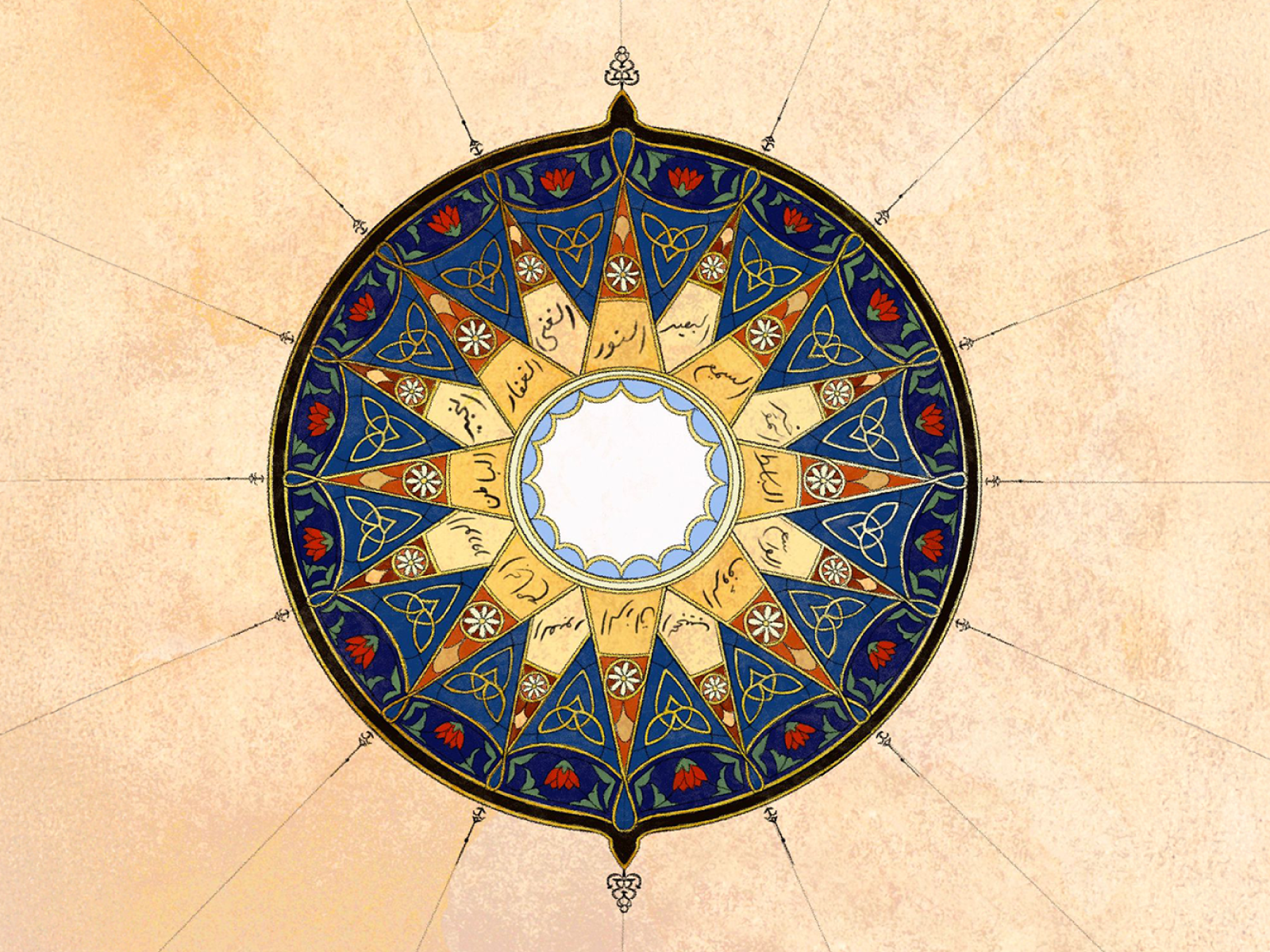
Whispers of Ya Wadud & Nur
I am no scholar or an imam, just a seeker with a habit of stumbling. I will likely trip again, but I am walking this path anyway. Faith and doubt are my constant companions on this journey. Faith whispers trust, while doubt asks why. Together, they keep me open to the unknown as I search for haq. Sada maujood – everpresent.
When I was little and had just learned namaz, it wasn’t enough for me to end it with the dua rabbana atina fid dunya that asks for some kind of ‘good’ in this life and after. I wanted to be articulate, so they may understand. I added the supplication of Musa to my routine prayer. ‘O Allah, open my chest and ease my task for me. Untie my tongue so that they may understand my speech.’ Maybe if I used the right words, the people around me would really see me, understand me, and we could become close. Words have since been a part of my queer becoming.
Raised in a society that upholds punitive values, many queer people can hold themselves low when love isn’t as abundant, as birthright, but instead is scarce. Raised with the fear of loss of this love, with the belief that it must be earned under a stricter code of conduct, and that it can be withdrawn upon any mishap, or misalignment, many queer Muslims, can struggle to cave into Rahma – mercy, compassion. To undo these socialisations, I turn to zikr – the mindful remembrance of Allah, a practice as old as Islam itself.
I came to zikr during the COVID-19 pandemic, when I could no longer step out, only within. I read the Quran like poetry, and I read poetry like the Quran. Like many seekers, a hermeneutical engagement helps me connect to the verses beyond literal translation. Which is how zikr becomes a way for me to find the balance between understanding that Allah and Their creation are neither the same as Allah, nor different from Them, and that They must be understood as both transcendent and immanent.
I found that a taweez is zikr given a physical form. A simple taweez carries Quranic script, like Asma al-Husna, the names of Allah, inside a grid of 16 boxes on a small piece of paper, folded and enclosed in an amulet worn around the neck, hanging over the wearer’s heart. I think a part of why Muslims wear it as a talisman is so that it keeps touching us.
Our relationship with screens has never been as tactile and intimate as it is now. I wanted a taweez I could open and read. So, I made mine on a digital surface, to use it to call upon Their timeless virtues I wish to integrate into my life.
The Sufi doctrine of Wahdat ul-Wujud tells us that Allah is the sole reality, the Essence expressed in all creations. This doctrine hints at our entanglement with our Creator. To practice zikr is an expression of acknowledgment, remembrance, and an act of reaching. To remember is to say that something isn’t separate from us, that it is already a part of us and we can reach it.
I reach out to 16 out of 99 of Their names and the verses they are invoked in the Quran. As I immerse myself in zikr, I let the names sink deeply into my being, and recognise Allah’s presence within all that exists. I tremble with curiosity: what if I claimed my own majesty? What if I surrendered inhibiting beliefs and zikr’d my Essence into being? What if I truly see every creation – animate and inanimate, vocal and voiceless, me and you – as nothing less than magnificent? Could I channel and exercise a love that’s merciful and forgiving like Rahman? Might it guide me to honor myself and all beings as sacred? Connecting to my deepest longings through the power of possibility, I ask these questions to Khud/a.
Moulana Rumi’s poetry, khud kooza khud koozagar khud gil-e-kooza – I am the pot, the potter and the clay, teaches us that separation is a lie we tell ourselves till we believe it’s true. Wahdat ul Wujud, the Unity of Existence, exposes this fiction, affirming that ‘there’s nothing here but me’ and ‘we’ve been together all along’ describe the same timeless truth.
When I felt separated, I misunderstood my elders’ affirmations – ‘Allah rehm karega’, ‘Allah rastay asaan banaega’, or ‘Allah maalik hai’ as passive deflections. Now, I see them as invocations, beckoning Their mercy might open an unexpected channel. Might that channel be my queer body? For a people deemed lewd, foul, and aberrant in society, this entanglement with the Divine restores our inherent connection and undoes our vilification. It challenges anti-trans legislation and movements that seek our erasure. Wahdat ul Wujud reaffirms our belonging to the sacred. Zikr is how we can remember it.

I open my taweez and read Their names as mine. Clicking on them one by one, I enter the sacred text, and into Unity, with the help of the word ‘I’.
Ya Nur! May I shed the need to belong, to conform. Instead, I take in Your Essence, radiant and unbound, and glow, untethered to fuel or flame.
Ya Ghaffar! May I be that gentle rain that soaks a parched land. May I harbor no stone, no grit again. May I be the gust that sweeps away all shards of resentment. Release now, my clenched fist, my guarded heart. May no thorn’s prick, no bite’s sting harden me forever. Like autumn leaves, may grudges wither and crumble to nourish the soil beneath. May love, like wildflowers, bloom in their place. Ya Ghaffar, teach me how to love the razor-sharp beak, the venomous fang, the piercing gaze.
Ya Ghani! I recognize the paradox of me: needing, yet already whole. I have, not the freedom from need, but the freedom of need: I need unabashedly, freely, and expansively–never from desperation or greed, but from the overflow and abundance of all that You set for me.
What slips through the cracks of my awareness? Ya Khabeer, reveal it to me. In this moment, what lies forgotten, like waves that have lost their shape? Ya Khabeer, bring it to memory. Who calls out, unseen, unheard, yet longs for my attention? Whose truths did I miss, whose hands did I overlook? Guide me, ya Khabeer.
Someday, when the time is ripe, I will be the vessel for ya Jami’s uniting power; be the Pied Piper of hearts and their shards. Till then, may Sabr be my approach to life’s twists and turns. I embody the Sabr that comes from knowing You. I remember: patience is not stagnation, but a dynamic unfolding of khair, like a pearl formed in the stillness of its shell, layer by layer.
I take your name
A little ball of air
between my forefinger
and thumb
turns into
a prayer bead
– Akhil Katyal
Binaries collapse when queer Muslims pray.
Zikr after zikr, the barrier between khud and Khuda is lifted. What an honor it is to partake in our own creation, against the scarcity of oppressive regimes, like capitalism, patriarchy, racial, ethnic and caste supremacies and carceral logic that steal from us our capacities, our compassion, our majesty. Who might we become if we refuse our dehumanization without bypassing it, and cave into the whispers of ya Wadud and Nur, who promise us infinity?
